

2025-04-18
In recent years, driven by growing demand for green urban transportation and environmental policies, the market for electric motorcycles and electric bikes has experienced rapid growth. Whether for daily commuting or applications such as delivery and food delivery services, electric motorcycles have gained favour among users due to their efficiency, convenience, and cost-effectiveness. As the ‘heart’ of electric motorcycles, battery performance plays a significant role in determining the vehicle's range, power, safety, and overall user experience. Currently, the most common battery types on the market include high-performance lithium-ion batteries and graphene batteries, each with distinct characteristics in terms of performance, charging efficiency, and technological maturity. This article will provide an in-depth comparison of the advantages and differences between these two battery types, helping users better understand and select the battery type that best suits their needs.
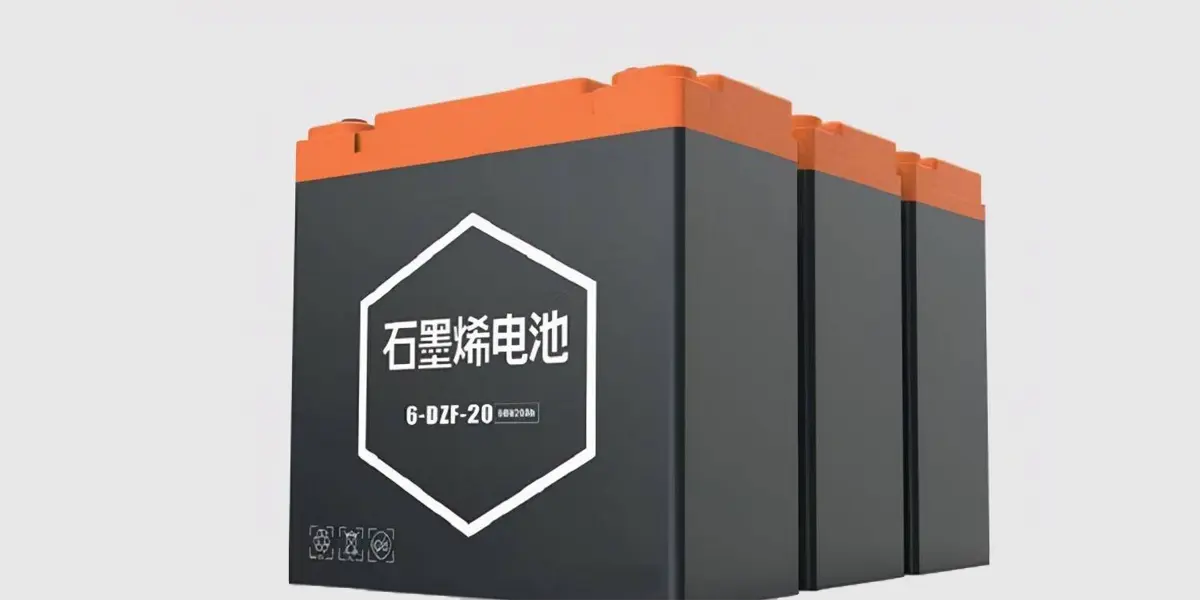
Graphene Battery
Graphene is a two-dimensional honeycomb crystal structure composed of a single layer of carbon atoms, featuring extremely high electrical conductivity, thermal conductivity, and mechanical strength. In battery applications, graphene is commonly used as a coating material for electrodes or as a conductive additive to significantly enhance the battery's charging and discharging speed, energy density, and heat dissipation performance. Graphene batteries are not entirely made of graphene as the primary material but are instead developed by integrating graphene materials into lithium-ion battery or supercapacitor technology to achieve performance upgrades. Compared to traditional lead-acid batteries, graphene batteries offer distinct advantages in terms of weight, charging efficiency, cycle life, and low-temperature performance. Not only do they charge faster, but they also provide higher energy output per unit volume, meeting the higher demands of modern electric motorcycles on power systems.
Graphene batteries offer a significant improvement in energy density compared to traditional lead-acid batteries, enabling them to store more electrical energy per unit weight, which directly enhances the range of electric motorcycles. For example, electric vehicles equipped with graphene batteries can achieve a 10%-20% increase in range under the same volume, with some models achieving a tested range of over 120 kilometers. Additionally, graphene's excellent electrical and thermal conductivity enables extremely fast charging efficiency, with the ability to charge up to 80% of the battery in as little as 10 minutes, significantly reducing charging wait times. In terms of cycle life, graphene batteries also demonstrate greater stability, capable of withstanding approximately 600 charge-discharge cycles under normal use, offering a longer service life and greater durability, making them suitable for high-frequency usage scenarios.

Yadea G5 Electric Bike
Currently, several well-known brands in China have launched electric motorcycle models equipped with graphene batteries, such as the Yadea G5 Graphene Edition, Niubility UQi+ Graphene Edition, and GreenSource E3 Graphene Edition. These models primarily emphasize long-range battery life and fast charging capabilities. Among these, the Yadea G5 Graphene Edition has a tested range exceeding 100 kilometers and supports fast charging, making it ideal for long-distance rides or high-frequency use cases such as food delivery and courier services. The NIU UQi+ Graphene Edition, on the other hand, is known for its lightweight and agile design, making it suitable for urban short-distance commuting and daily transportation needs. Depending on their specific use cases, users can consider factors such as range, charging time, and battery lifespan to choose the most suitable graphene-powered electric motorcycle model for their needs.

72V 60Ah Electric Bike Battery
Lithium-ion batteries are the most widely used type of power battery in the current electric motorcycle industry, typically divided into two main categories: ternary lithium-ion batteries and lithium iron phosphate batteries. Ternary lithium-ion batteries are renowned for their high energy density, offering superior range and lighter weight, making them ideal for users prioritizing performance and range; lithium iron phosphate batteries, however, excel in terms of safety and cycle life, making them suitable for commuting or commercial applications where stability is a key requirement. From a working principle perspective, both types achieve charging and discharging through the movement of lithium ions between the positive and negative electrodes, but their positive electrode materials differ: ternary lithium batteries use nickel-cobalt-manganese (NCM) or nickel-cobalt-aluminum (NCA), while lithium iron phosphate batteries use lithium iron phosphate material. Additionally, lithium iron phosphate batteries have a more stable internal structure and stronger resistance to thermal runaway, while ternary lithium batteries have a more compact structure and higher energy density. Users can balance performance, safety, and lifespan based on their specific usage requirements.
In the electric motorcycle sector, lithium-ion batteries have emerged as the dominant choice due to their significant performance advantages.
Lithium-ion batteries, with their numerous advantages, have become the preferred choice for electric motorcycles, finding widespread application in daily commuting, medium-to-long-distance travel, shared rental services, and on-demand delivery scenarios, significantly enhancing practicality and convenience. However, in high-performance applications such as racing, the demands on lithium-ion batteries are even more stringent: they must possess ultra-high power density (to deliver extreme instantaneous acceleration), extreme lightweight design (to achieve millisecond-level weight reduction advantages), robust thermal management systems (to handle sustained high-intensity discharge), and ultra-fast charging capabilities (to adapt to the intense pace of racing schedules). These characteristics are the core drivers enabling electric race cars to push performance boundaries to their limits, and ordinary batteries simply cannot meet these requirements.

Graphene batteries vs. lithium battery
Currently, graphene batteries for electric motorcycles on the market are primarily used to improve lead-acid batteries. Under the same voltage and capacity specifications (e.g., 60V 20Ah), their range is typically still significantly lower than that of lithium-ion batteries. The core reason lies in the energy density (Wh/kg) of lithium-ion batteries, which is far higher than that of graphene batteries (lithium-ion batteries range from approximately 120 to 200+ Wh/kg, while high-quality graphene batteries are around 40 to 50 Wh/kg). This means that for the same energy storage capacity (Wh), lithium-ion battery packs are lighter and more compact in size, or, under the same specifications (volume/weight), lithium-ion batteries can store more energy, thereby providing a longer range.
Key factors affecting the difference in battery life between the two:
Lithium-ion batteries significantly outperform current mainstream graphene lead-acid batteries in terms of charging speed. The core reason lies in the differences in chemical systems: lithium-ion batteries (such as ternary lithium and lithium iron phosphate) inherently possess high-rate charging and discharging capabilities, enabling them to safely withstand larger charging currents. Combined with advanced battery management systems (BMS) and liquid cooling/air cooling heat dissipation technologies, high-end electric motorcycle lithium-ion batteries generally support high-power fast charging (such as 1C or even higher rates). This means, for example, that a 20Ah lithium-ion battery could theoretically charge from 0% to over 80% in approximately one hour (subject to limitations such as temperature and charging station power). However, the graphene batteries currently available on the market are essentially modified versions of lead-acid batteries. While their charging acceptance capability has improved compared to ordinary lead-acid batteries, it remains far below that of lithium batteries. Their charging current is limited (typically recommended at 0.2C-0.3C), and fully charging a graphene lead-acid battery of the same capacity usually takes 6-8 hours or even longer.
In terms of cycle life, lithium-ion batteries for electric motorcycles significantly outperform graphene lead-acid batteries. High-quality lithium-ion batteries for electric motorcycles (such as lithium iron phosphate/LFP) typically achieve standard cycle counts (charging and discharging to 80% capacity retention) of 1,500 to 3,000 cycles or higher (ternary lithium/NMC batteries achieve approximately 800 to 1,200 cycles). While graphene batteries offer improved cycle life compared to conventional lead-acid batteries, their cycle life is still only around 600 cycles. This means that under the same usage intensity, lithium-ion batteries typically have a service life that is twice as long as graphene lead-acid batteries, or even longer, resulting in lower long-term replacement costs.
Note: Some companies mention graphene lithium batteries (referring to lithium batteries with added graphene), which aim to enhance fast charging or lifespan. However, their mass production availability and cost-effectiveness have not yet surpassed mature lithium battery systems, and their lifespan advantages are not significantly evident in current market products.
Electric motorcycle lithium batteries have overwhelming advantages in terms of weight reduction and space efficiency. For the same capacity (such as 60V 20Ah battery), lithium battery packs typically weigh only one-third to one-half as much as graphene lead-acid battery packs (e.g., lithium battery packs weigh approximately 10–15 kg, while graphene lead-acid battery packs weigh approximately 25–35 kg).
Significantly reduce the overall weight of the vehicle: The significantly reduced battery weight directly lowers the overall mass of the electric motorcycle, making the chassis lighter and easier to handle.
Optimise centre of gravity and free up space: Lithium-ion battery packs are smaller in size and more flexible in design, allowing them to be positioned in lower, more central locations such as the bottom or middle of the frame. This effectively lowers the vehicle's centre of gravity and improves stability. Additionally, the saved space enables optimised frame design, increased storage compartments, or the placement of other components (such as larger motors or cooling systems). In contrast, bulky graphene lead-acid batteries typically occupy fixed large spaces such as under the footrest or seat, raising the centre of gravity and encroaching on usable space.
In terms of purchase cost, graphene batteries offer a significant advantage over lithium-ion batteries. For batteries of the same specifications (e.g., 60V 20Ah batteries), the price of a graphene battery pack is typically only one-third to one-half that of a lithium-ion battery pack. This is primarily due to three factors: first, there is a significant difference in raw material costs, as the primary material in graphene lead-acid batteries, lead, is far cheaper than the key raw materials required for lithium-ion batteries, such as lithium, cobalt, and nickel; Second, the production processes differ in complexity. Lead-acid battery production lines (including graphene batteries) are mature, highly automated, and have low manufacturing costs, while lithium-ion battery production involves precise coating, drying, electrolyte filling, formation, aging, and complex BMS integration, with stringent process requirements and higher equipment and energy costs; Therefore, whether it is a small-capacity (60V 30Ah) or large-capacity (72V 60Ah) model, graphene batteries maintain a significant cost advantage, making them the preferred choice for budget-conscious users or low-end electric motorcycles; lithium-ion battery prices increase more significantly with capacity, with high-end large-capacity models being more expensive.
However, from a long-term usage perspective, lithium batteries typically offer better economic performance. The key lies in their significantly longer cycle life compared to graphene lead-acid batteries: high-quality lithium batteries (such as lithium iron phosphate) can achieve a lifespan of 1,500–3,000 cycles, which is 3–5 times longer than that of graphene lead-acid batteries. This means that under the same usage intensity, lithium batteries may only need replacement after 5–8 years, while graphene batteries typically require replacement every 2–3 years. Even if lithium-ion batteries are initially 2-3 times more expensive, when spread over a longer service life, their annual or per-kilometre cost is often lower. When factoring in additional advantages such as longer range, slightly higher charging efficiency, and maintenance-free operation, the long-term cost-saving and hassle-free benefits of lithium-ion batteries become even more evident. Additionally, the recycling value of lithium-ion batteries is generally higher than that of lead-acid batteries (including graphene-based ones), and their environmental disposal costs are lower.
Safety is the most critical issue for electric motorcycle batteries. Generally speaking, the primary risk associated with lithium-ion batteries (ternary lithium batteries) lies in the potential for thermal runaway: their internal organic electrolyte is flammable, and thermal runaway triggered by physical damage, overcharging, over-discharging, high temperatures, or internal short circuits could lead to fires or even explosions. Therefore, the Battery Management System (BMS) is critical—a high-quality BMS must have precise voltage/current/temperature monitoring, cell balancing, overcharging/over-discharging protection, short-circuit disconnection, and thermal runaway suppression functions. These are the core safeguards for lithium-ion battery safety.
In contrast, graphene batteries (lead-acid-based) have more stable chemical properties and are less flammable. Their electrolyte is a water-based sulphuric acid solution, eliminating the risk of explosion, resulting in higher baseline safety. However, note that overcharging may release flammable hydrogen gas (ventilation is required), and short circuits or impacts may cause localised high temperatures and shell deformation.
In summary, graphene lead-acid batteries have superior basic stability, while lithium batteries achieve controllable safety through advanced BMS and structural protection.
When selecting a battery, the primary considerations are range requirements and charging convenience. If daily mileage is high, charging time is limited (e.g., due to work requirements), or there is significant range anxiety, lithium-ion batteries are the undisputed top choice. Their high energy density provides significantly longer range per charge, and they support high-power fast charging. Some electric motorcycle lithium-ion batteries support 3C rate charging (e.g., 74V 60Ah lithium batteries), greatly enhancing usage efficiency. Graphene batteries, while offering improved range and charging speed (typically taking 6-8 hours to fully charge) compared to conventional lead-acid batteries, still lag significantly behind lithium-ion batteries. They are more suitable for short-distance commuting on fixed routes, users with access to fixed, long-term charging facilities, and those with less stringent range requirements.
When selecting a battery for an electric motorcycle based on budget. The core advantage of graphene batteries lies in their extremely low initial purchase cost (priced at only 1/3 to 1/2 of lithium batteries for the same specifications), making them highly attractive to users with strict budget constraints or those targeting low-end vehicle segments. However, while lithium batteries require higher upfront investment, their ultra-long cycle life and superior performance typically result in lower long-term usage costs. In simple terms: choose graphene lead-acid batteries for budget-constrained users; opt for lithium batteries for those prioritising durability and long-term value.
With the continuous advancement of new energy technologies, the power batteries used in electric motorcycles are evolving towards higher energy density, faster charging capabilities, and longer service life. Graphene batteries, as the best option within the lead-acid battery system, demonstrate significant potential in enhancing charge/discharge efficiency, reducing charging time, and extending service life, thanks to their excellent conductivity and thermal stability.
Meanwhile, traditional lithium-ion battery technology continues to innovate. Whether it is the breakthrough in energy density of ternary lithium batteries or the structural improvements and high-rate applications of lithium iron phosphate batteries, lithium-ion batteries will continue to dominate the electric motorcycle market in the future. Overall, the technological evolution of lithium-ion batteries remains the core driving force behind performance upgrades in electric motorcycles, while graphene serves as a transitional solution within the lead-acid battery system.
In summary, the selection of electric motorcycle batteries essentially boils down to a precise match between ‘demand and budget.’ Graphene batteries, with their low initial purchase price and basic safety features, are a practical choice for short-distance commuting and budget-conscious users; lithium-ion batteries, on the other hand, offer superior energy density (long range), fast charging, significant weight reduction and handling advantages, as well as better long-term usage costs, making them the top choice for users seeking efficient mobility, performance experience, and long-term value. As technological advancements and economies of scale continue to drive down costs, the comprehensive advantages of lithium-ion batteries will become increasingly evident, propelling electric motorcycles toward smarter, more efficient, and safer evolution.


